

Baiathe little Rome on the sea
Underwater Archaeological Park, Aragonese Castle, Roman baths, diving
Not a seaside village, a sunken Roman city
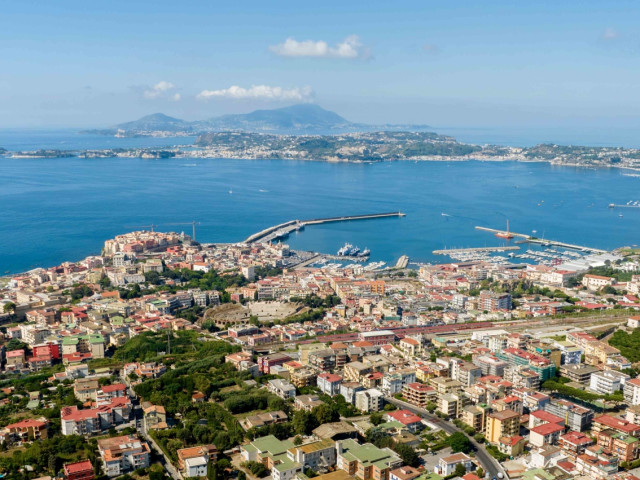
Baia is part of the town of Bacoli, some twenty kilometres from Naples, at the gateway to the Campi Flegrei. Two thousand years ago it was the “little Rome on the sea”: emperors and patricians chose it as their retreat for the thermal waters and the mild climate, and built villas, baths and gardens along the shore.
Then bradyseism — the slow breathing of the volcanic ground — took part of the city below sea level. Today streets, mosaics and statues lie a few metres down, inside the Underwater Archaeological Park of Baia: one of the very few sites in the world you visit with a mask, or from a glass-bottom boat.
Baths, castle and myth
Above sea level stand the Archaeological Park of the Baths of Baia, a vast terraced complex overlooking the gulf, and the Aragonese Castle, which crowns the headland and houses the Archaeological Museum of the Phlegraean Fields.
Then there is the myth: legend places the meeting of Ulysses and the sorceress Circe here, and the name itself is said to come from Baios, Ulysses’ helmsman. All around: the Gulf of Pozzuoli, the beaches, the dive sites and the wines of Monte di Procida.
Twenty kilometres from Naples, in the heart of the Phlegraean Fields
Baia sits at the centre of everything: the underwater park and the baths in town, Bacoli and Lake Miseno minutes away, Pozzuoli and the Solfatara a little further on. And the port of Acquamorta, at Monte di Procida, where the island crossings leave from.

Why choose Baia
Four letters, four reasons to stop here instead of driving past.
Beauty underwater, with the unique Underwater Archaeological Park.
Ancient Roman baths, testimony to imperial luxury.
Inspiring landscapes, over the gulf and the Phlegraean Fields.
Aragonese Castle, the symbol of the town and home to the Archaeological Museum.
When to visit Baia
Every season has its own character, but spring and early autumn remain the best: you can walk the archaeological sites without the August heat, and the sea is still warm enough to go down over the sunken park. July and August are for lively beaches and long evenings.
Mild climate
Pleasant days for exploring the ruins and for being in the water.
Quieter visits
Away from the summer crowds, the sites can be taken slowly.
Sea still warm
Warm enough for diving and snorkelling over the sunken park.
Cultural events
Festivals, guided tours and historical reenactments across the Phlegraean sites.
How to reach Baia
Getting to Baia is simple: it lies about 20 km from Naples, at the gateway to the Campi Flegrei. By car you take the Naples ring road and exit at Arco Felice or Bacoli: it is a thirty to forty minute drive. A car gives you the freedom to explore the whole area, but in summer traffic is heavy and parking near the coast is limited.
The alternative is the Cumana railway, which connects Naples to Torregaveta: from there a short bus or taxi ride brings you into Baia. It does, however, mean a change, and trains are crowded at rush hour. There are also direct buses on the local lines from Naples towards Bacoli and Baia: journey times depend heavily on traffic.
And then the sea. Baia has no scheduled connection in the Coastrider catalogue, but the port of Acquamorta, at Monte di Procida, is a few minutes away by car: from there you can reach Procida and Casamicciola, on the island of Ischia, and be back the same evening. It is the finest way to add an island to your Phlegraean day.
By car
- Naples ring road, exit Arco Felice or Bacoli: thirty to forty minutes from the centre.
- Queues on the roads towards Bacoli are common, especially at weekends.
In summer, heavy traffic and limited parking near the coast — better to leave the car behind and travel by sea.
By train or bus
- Cumana line from Naples to Torregaveta, then a short bus or taxi ride into Baia.
- Buses from Naples to Bacoli and Baia, with timings tied to coastal traffic.
The train means a change and the bus gets stuck in traffic — for the islands, the ferry from Monte di Procida is the most direct route.
A proper Rider picks the fastest option — but also the most beautiful one.
In Baia the sea is not how you arrive: it is half of what there is to see.
The Phlegraean islands from Acquamorta
From the port of Monte di Procida, minutes from Baia, Capitan Morgan sails to the islands across the water: out in the morning, back in the evening, with no car and no queues at the big terminals.
- Two crossings: Procida from €5.70 and Casamicciola, on Ischia, from €4.30.
- Departure from Acquamorta at 10:00, return at 18:00 from Casamicciola and 18:40 from Procida.
- Sailings run on Thursdays and Fridays: plan your day around them.
Worth knowing about Baia:
- The Coastrider catalogue lists no scheduled service calling at Baia.
- The sunken park is visited by glass-bottom boat, snorkelling or diving, with local operators.
- Sailings depend on the season and on sea conditions: check your date.
Is one day enough to visit Baia?
For the essentials, yes: the Baths in the morning, the Aragonese Castle and its museum in the afternoon, and sunset over the Gulf of Pozzuoli.
But the sunken park asks for its own time: the glass-bottom boat, the snorkelling or the dive take half a day and need booking.
With two days you add Bacoli, Lake Miseno, Pozzuoli and the Solfatara: the Campi Flegrei are easy to cover from here.
With three, an island comes into play: on Thursdays and Fridays you sail from Acquamorta to Procida or Casamicciola and return the same evening.
Need a hand?
Message us on WhatsApp and talk to a real person.
Pick the day that suits you
Baia changes a great deal depending on whether you come with the kids, as a couple, or with a wetsuit in the boot.

The sunken city from the boat
The glass-bottom boat over the underwater park, lunch on the harbour and the afternoon at the Aragonese Castle.
See the itinerary →
Roman baths and sunset over the gulf
The terraces of the archaeological park, the museum inside the castle and a seafood dinner facing the Gulf of Pozzuoli.
See the itinerary →
A dive and the Campi Flegrei
A dive over the sunken Roman streets, then Bacoli, Lake Miseno and the Solfatara. Or an island from Acquamorta.
See the itinerary →Practical tips & FAQ for visiting Baia
The questions we get asked most. If yours is not here, ask  .
How do you get to Baia?
Are there ferries to Baia?
How much does the crossing to the islands cost?
checks it in real time.What is the underwater archaeological park of Baia?
Can you visit without being able to swim?
What is there to see in Baia besides the sunken park?
Why was Baia called the “little Rome on the sea”?
Are there beaches in Baia?
How long do you need in Baia?
When is the best time to visit Baia?
Any practical tips before you go?
- book the sunken-park trip ahead: places are limited and depend on the sea
- check the opening hours of the archaeological sites, which change with the season
- wear comfortable shoes: the Baths are a terraced complex, all up and down
- if you want to add an island, plan a Thursday or Friday and leave from Acquamorta
- in summer, allow time to find parking near the coast
Plan your day in Baia and make the most of your time in the Phlegraean Fields
Tell , Coastrider’s virtual travel assistant, how you travel: she builds the day and books what you need.