
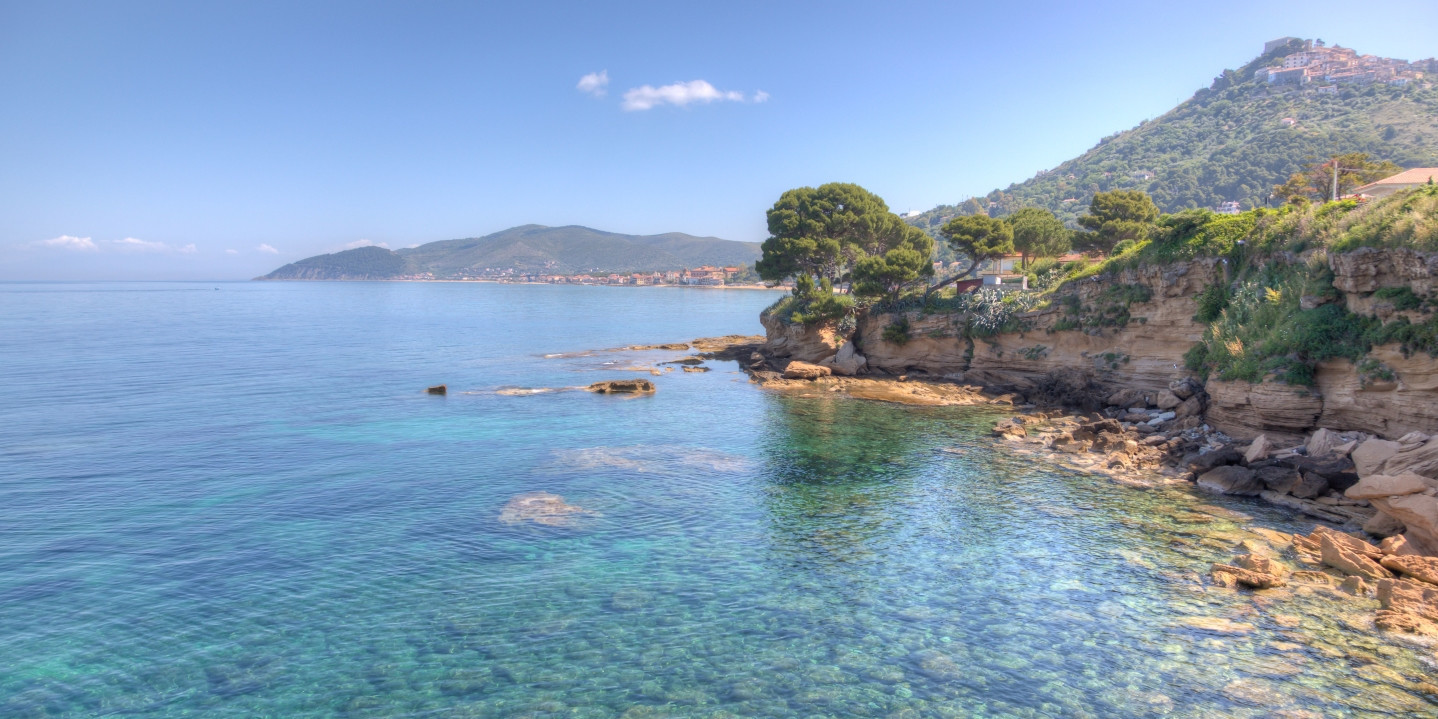
Castellabatethe village and the sea of San Marco
Medieval village, Abbot’s Castle, San Marco harbour, Blue Flag beaches
Not just a village: history, tradition and the sea
Castellabate is one of the Most Beautiful Villages in Italy, and the film Welcome to the South made it famous — yet the atmosphere here has stayed exactly what it was. The medieval centre sits on a hilltop looking down at the coast, with stone alleys, small squares and the Abbot’s Castle, which has watched over the town since the Middle Ages.
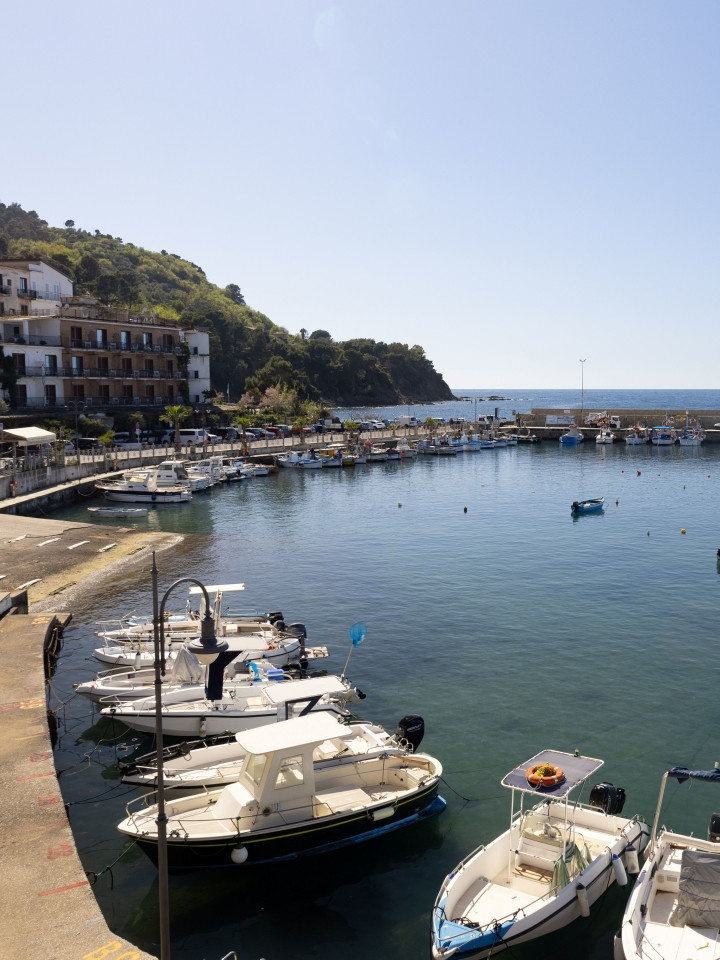
Walk down towards the water and you reach San Marco di Castellabate: a picturesque little harbour, quiet beaches and water awarded the Blue Flag year after year. It is the right place to combine the charm of a historic village with the slow life of a seaside town.
From the hilltop castle to San Marco harbour
Up top, the village: the Abbot’s Castle, the belvedere of piazza Lucia with its view over the Gulf of Salerno, the churches and the alleys that fill up late into summer evenings. Walking here means breathing in an ancient atmosphere alongside the vitality of village life, with folk festivals and religious traditions.
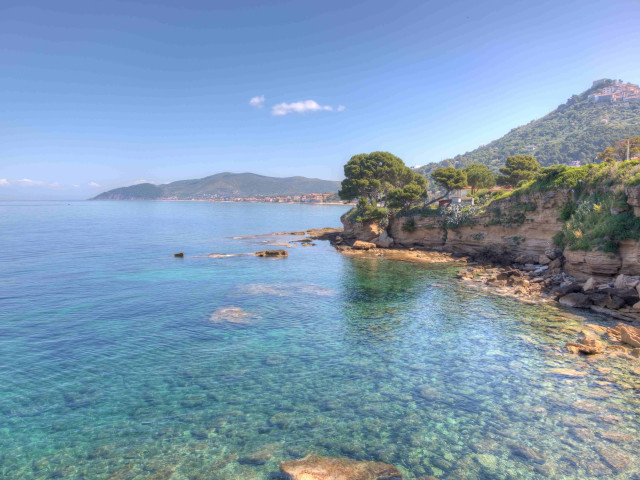
Down below, the sea: San Marco harbour, the long beaches towards Santa Maria and the coves under the cliffs. And Cilento cooking, which is the reason many people come back: fresh fish, olive oil and vegetables from inland.
Between Agropoli and Acciaroli, in the heart of Cilento
San Marco is a port of call on the Cilento coastal line and Agropoli-Castellabate station is twenty minutes away by bus: the other seaside villages are a boat ride from here, and Paestum, Velia and the National Park all stay within a day trip.
Why choose Castellabate
The name of the village already lists the reasons to stop: what you take home from a day here.
Charming medieval centre.
Authentic atmosphere.
San Marco harbour.
Territory between sea and hills.
Excellent Cilento gastronomy.
Long Blue Flag beaches.
Links to culture.
Authentic hospitality.
Breathtaking nature in the Cilento Park.
Adventures in the open air.
Timeless sunsets.
Experiences rooted in tradition.
When to visit Castellabate
Castellabate is lovely in every season, but spring and early autumn are the best times to enjoy both the village and the sea in peace. If you want a lively atmosphere, July and August bring events, shows and long summer evenings.
Pleasant climate
Sunny, mild days, perfect for walks and excursions.
Quieter beaches
Compared with July and August the coast is far more relaxing.
Authenticity
Local fairs and traditional feasts show the village’s true soul.
Landscapes at their best
Spring and autumn bring unique colours, from green hills to blue sea.
How to reach Castellabate
Reaching Castellabate is simple and pleasant: the village sits between Agropoli and Acciaroli, right in the heart of Cilento. By car from Salerno take the A2 motorway to Battipaglia, then the SS18, exit at Agropoli Sud and follow the signs: about an hour and a half. Driving is convenient for exploring the villages and beaches nearby, though in summer traffic is heavy and parking scarce.
The practical alternative is the train: the nearest station is Agropoli-Castellabate, on the Naples–Reggio Calabria line, and from there a bus or shuttle brings you into town in about twenty minutes. Very handy from Naples and Salerno, though it does require a transfer. There are also seasonal buses run by Busitalia and private companies from Naples and Salerno: slower and at the mercy of traffic.
And then the sea. The harbour of San Marco di Castellabate is a port of call on the Cilento coastal line operated by TraVelMar: every day there are sailings to and from Agropoli, Acciaroli, Palinuro, Marina di Camerota and Sapri, two per direction. Watching the village and its harbour appear from the water is something else entirely.
By car
- A2 to Battipaglia, then the SS18 and the Agropoli Sud exit: about an hour and a half from Salerno.
- In the village the streets are narrow, and in summer traffic slows to walking pace.
Parking in the village is a struggle — by ferry you land at San Marco, right in the centre.
By train or bus
- Agropoli-Castellabate station, then bus or shuttle in about twenty minutes.
- Seasonal coaches from Naples and Salerno, with reduced timetables out of season.
The train means a change and the bus depends on traffic — the sea is the most direct way in.
A proper Rider picks the fastest option — and the most beautiful one too.
In San Marco you step off in the village harbour, with the beaches a few steps away.
Castellabate by ferry
San Marco harbour is a port of call on the Cilento coastal line: you step off in the village, with no SS18 and no parking to hunt for.
- Five direct connections every day: Agropoli from €6.00, Acciaroli from €9.00, Palinuro from €14.50, Marina di Camerota from €15.50 and Sapri from €17.50.
- Two sailings per direction: from San Marco they leave at 09:35 and 14:10 southbound, at 12:15 and 18:35 for Agropoli.
- From the quay the beaches, the restaurants and the climb to the medieval village are minutes away.
Good to know before you sail:
- Every route is operated by TraVelMar, the company running the Cilento coastal line.
- With two sailings a day per direction a day trip works: pick your time by how long you want to stay.
- The service depends on the season and on sea conditions: check your date.
Is one day enough to visit Castellabate?
For the essentials, yes: the medieval village and the Abbot’s Castle in the morning, lunch in San Marco and an afternoon on the beach.
But there are two towns in one here, the hilltop and the seaside, and each asks for its own time. Sunset is watched from above; dinner happens by the harbour.
Two days bring in the beaches towards Santa Maria, the coves under the cliffs and a crossing to Agropoli or Acciaroli.
Three days bring in the Cilento National Park: trails, inland villages and the archaeological sites of Paestum and Velia.
The company serving San Marco
Every sea connection to and from San Marco di Castellabate is operated by TraVelMar, the company running the Cilento coastal line.

Need a hand?
Message us on WhatsApp and talk to a real person.
Pick the day that suits you
The same village changes with the way you travel: with children, as a couple, or with a backpack and the urge to walk.

Beach in San Marco, village at sunset
A morning on the Blue Flag sand, lunch by the harbour and the climb to the medieval village as the sun goes down.
See the itinerary →
Alleys, belvedere and dinner by the harbour
The Abbot’s Castle, the belvedere over the Gulf of Salerno and a seafood dinner overlooking San Marco harbour.
See the itinerary →
Coves, trails and villages by sea
The coves under the cliffs, the trails of the Cilento Park, or the crossing to Agropoli, Acciaroli or Palinuro.
See the itinerary →Practical tips & FAQ for visiting Castellabate
The questions we get most often. If yours isn’t here, ask  .
How do you get to Castellabate?
Are there ferries to Castellabate?
How much does the ferry to San Marco di Castellabate cost?
checks it in real time.What time do ferries leave San Marco?
What is the difference between Castellabate and San Marco?
What is there to see in Castellabate?
Do the beaches in Castellabate have the Blue Flag?
Is this the village from Welcome to the South?
How long do you need in Castellabate?
When is the best time to visit Castellabate?
Any practical tips before you go?
- sailings run twice a day per direction: check the return time before you leave
- in high season book ahead, both the ferry and the train
- the village is on a hill and all uphill: wear comfortable shoes
- keep one evening for sunset from the belvedere and dinner in San Marco
- if you arrive by car in August, allow time to find parking
Book your ferry now and make the most of your time in Cilento
Check live availability and book your ferry online with , the Coastrider virtual travel assistant.