
Pisciottawhere the hills come down to the sea
Medieval village, Marina di Pisciotta, Blue Flag beaches, menaica anchovies
A hidden gem that kept everything
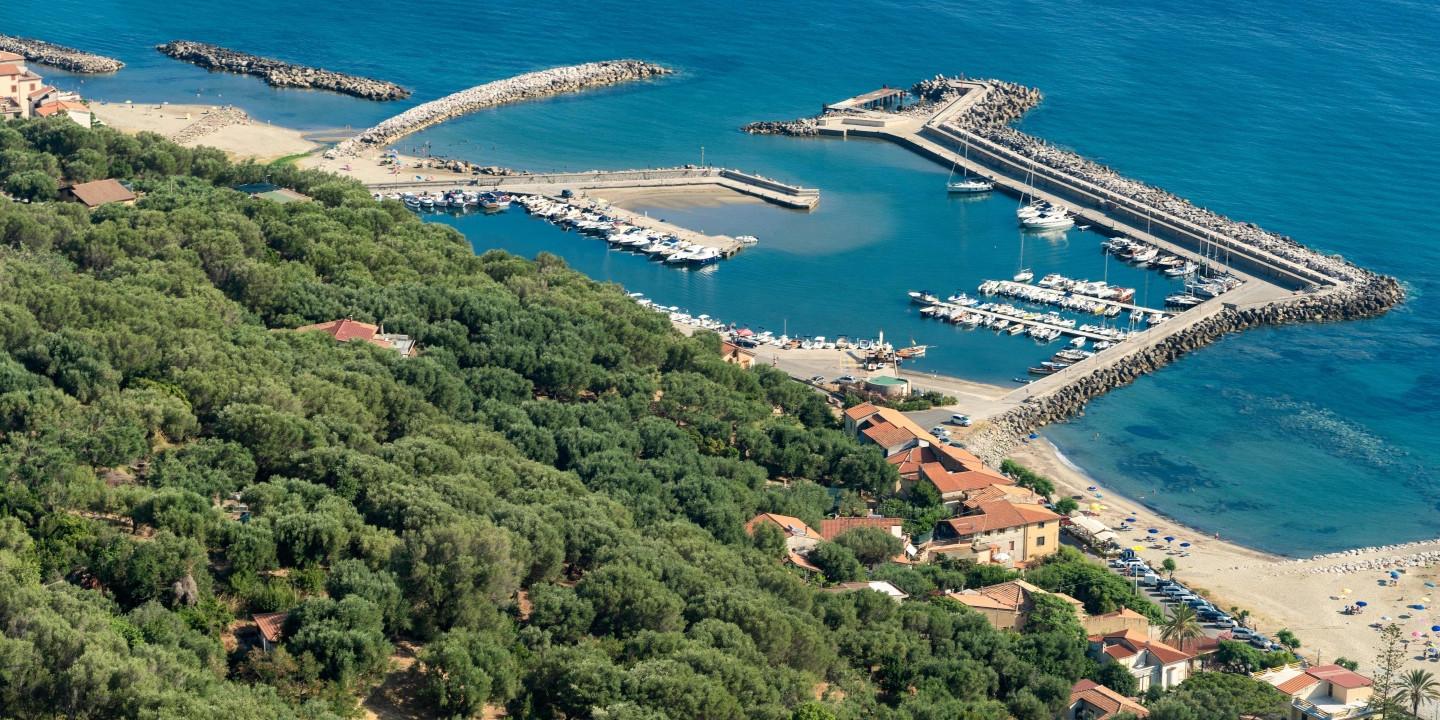
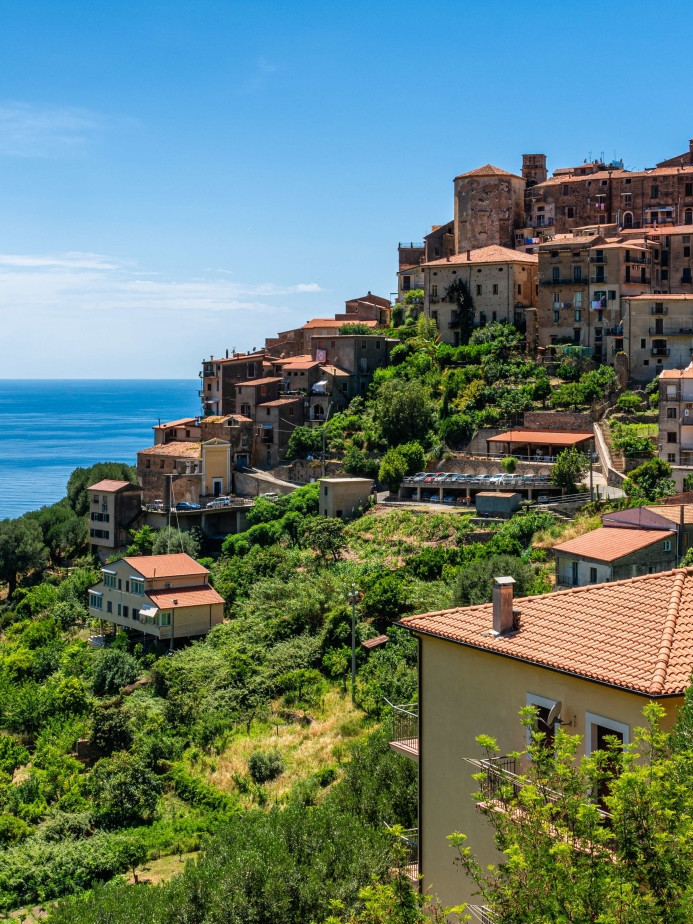
Pisciotta is one of those corners of Cilento that have preserved all the charm of the past. The medieval village clings to the hillside above a deep blue sea: a maze of stone alleys, arches and clustered houses, with views that look painted.
But it is not only history. Head down to the coast and you reach Marina di Pisciotta, with its Blue Flag beaches and a small harbour: life still follows the rhythm of tradition, starting with the age-old fishing of alici di menaica, a Slow Food presidium.
Olive trees, stone alleys and menaica anchovies
Around the village stand the centuries-old olive trees of the pisciottana variety, drawing the whole hillside and producing one of the most recognisable oils in Cilento. Up top, the old centre with its arches and viewpoints over the Gulf of Policastro.
Down below, the marina, where boats still go out with the menaica, the ancient net that gives the anchovies their name: worked by hand and preserved in salt, they are one of the flavours that best explain this coast. Around it, sandy beaches, coves and the trails towards Palinuro.
A short hop from Palinuro and Camerota
Pisciotta sits well away from mass tourism yet very close to the best-known spots on the coast: Palinuro and Marina di Camerota are a few kilometres away, and the Pisciotta-Palinuro station is on the Naples–Reggio Calabria line, right in the village.
Why choose Pisciotta
The name of the village already lists the reasons to stop: what you take home from a day here.
Picturesque landscapes, olive hills and clear sea.
Identity preserved, rooted in tradition.
Sandy Blue Flag beaches.
Charming medieval centre of alleys and arches.
Inspiring trails for walking.
Outstanding, genuine hospitality.
Tradition of menaica anchovies, a Slow Food treasure.
Tranquillity, far from the crowds.
Atmosphere in harmony between sea and hills.
When to visit Pisciotta
The village is enchanting all year round, but spring and early autumn remain the best seasons to enjoy it properly. For a full seaside holiday there are July and August, when the marina comes alive with beach clubs, evenings and events.
Mild climate
Ideal for exploring the village and for walking in nature.
Quieter beaches
Far less crowded than in July and August.
Unique scenery
Olive groves and hills bursting with seasonal colour.
Festivals and traditions
A chance to discover the food and customs of Cilento.
How to reach Pisciotta
Reaching Pisciotta is simple, and the journey itself can become part of the experience. By car from Salerno take the A2 motorway to Battipaglia, then the SS18, exit at Poderia and follow the signs: just over two hours. Driving lets you stop in the other villages along the way, though in summer traffic grows and parking in the village is limited.
The train is convenient: Pisciotta has its own station, Pisciotta-Palinuro, on the Naples–Reggio Calabria line, and from there both the hilltop village and the marina are easy to reach. It is the most direct choice from Naples and Salerno, though trains fill up in high season. Otherwise there are seasonal coaches by Busitalia and private companies.
And the sea. Pisciotta has no scheduled connection in the Coastrider catalogue, but the harbour of Palinuro is a few kilometres away: from there TraVelMar sails every day to Marina di Camerota, Acciaroli, Sapri, San Marco di Castellabate and Agropoli. It is the finest way to add a village to your day.
By car
- A2 to Battipaglia, then the SS18 and the Poderia exit: just over two hours from Salerno.
- The roads up to the hilltop village are narrow and winding.
Summer parking in the village is scarce — the ferry from nearby Palinuro spares you traffic and queues.
By train or bus
- Pisciotta-Palinuro station in the village, on the Naples–Reggio Calabria line.
- Seasonal coaches from Naples and Salerno, with few departures.
In high season trains fill up and need booking — by sea the journey is far more relaxed.
A proper Rider picks the fastest option — and the most beautiful one too.
In Pisciotta the sea is not only the way in: it is half of what there is to do.
The Cilento coast from Palinuro
From the harbour of Palinuro, a few kilometres from Pisciotta, TraVelMar connects the other seaside villages every day: leave in the morning, come back in the afternoon.
- Five direct connections: Marina di Camerota from €5.50, Acciaroli from €11.50, Sapri from €13.00, San Marco di Castellabate from €14.50 and Agropoli from €15.50.
- Two sailings per direction: from Palinuro they leave at 09:45 and 16:15 northbound, at 12:05 and 16:25 southbound.
- Every route is operated by TraVelMar, the company running the Cilento coastal line.
Good to know about Pisciotta:
- The Coastrider catalogue lists no scheduled service calling at Pisciotta.
- The village is up on the hill and the marina down on the sea: bear that in mind when choosing where to stay.
- The sea service depends on the season and on sea conditions: check your date.
Is one day enough to visit Pisciotta?
To see it, yes: the medieval village in the morning, lunch with menaica anchovies and an afternoon on the marina beach.
But Pisciotta is a slow-rhythm place: it makes sense if you stay, not if you pass through.
Two days bring in the trails among the olive groves, the coves and the evenings by the little harbour.
Three days add a village by sea: from the harbour of Palinuro you sail to Camerota, Acciaroli or Sapri and come back the same day.
Need a hand?
Message us on WhatsApp and talk to a real person.
Pick the day that suits you
The same village changes with the way you travel: with children, as a couple, or with hiking boots in your bag.

Beach at the marina, village at sunset
A morning on the Blue Flag sand, lunch by the little harbour and the climb to the village as the sun goes down.
See the itinerary →
Stone alleys and an anchovy dinner
The medieval centre with its arches and viewpoints, and a dinner of menaica anchovies facing the sea.
See the itinerary →
Trails through the olive groves and villages by sea
The paths through the centuries-old olive groves and down to the coves, or the crossing from Palinuro to Camerota or Acciaroli.
See the itinerary →Practical tips & FAQ for visiting Pisciotta
The questions we get most often. If yours isn’t here, ask  .
How do you get to Pisciotta?
Are there ferries to Pisciotta?
How much is the crossing to the other villages?
checks it in real time.What are menaica anchovies?
What is the difference between Pisciotta and Marina di Pisciotta?
Do the beaches in Pisciotta have the Blue Flag?
What is there to see in Pisciotta beyond the sea?
Is it close to Palinuro?
How long do you need in Pisciotta?
When is the best time to visit Pisciotta?
Any practical tips before you go?
- the village is all uphill and paved in stone: wear comfortable shoes
- decide whether to sleep on the hill or at the marina: it changes the day quite a bit
- keep one evening for menaica anchovies in a restaurant at the marina
- if you want to add a village by sea, leave from the harbour of Palinuro
- in summer allow time to find parking in the village
Plan your day in Pisciotta and make the most of your time in Cilento
Tell , the Coastrider virtual travel assistant, how you travel: she builds the day and books what you need.